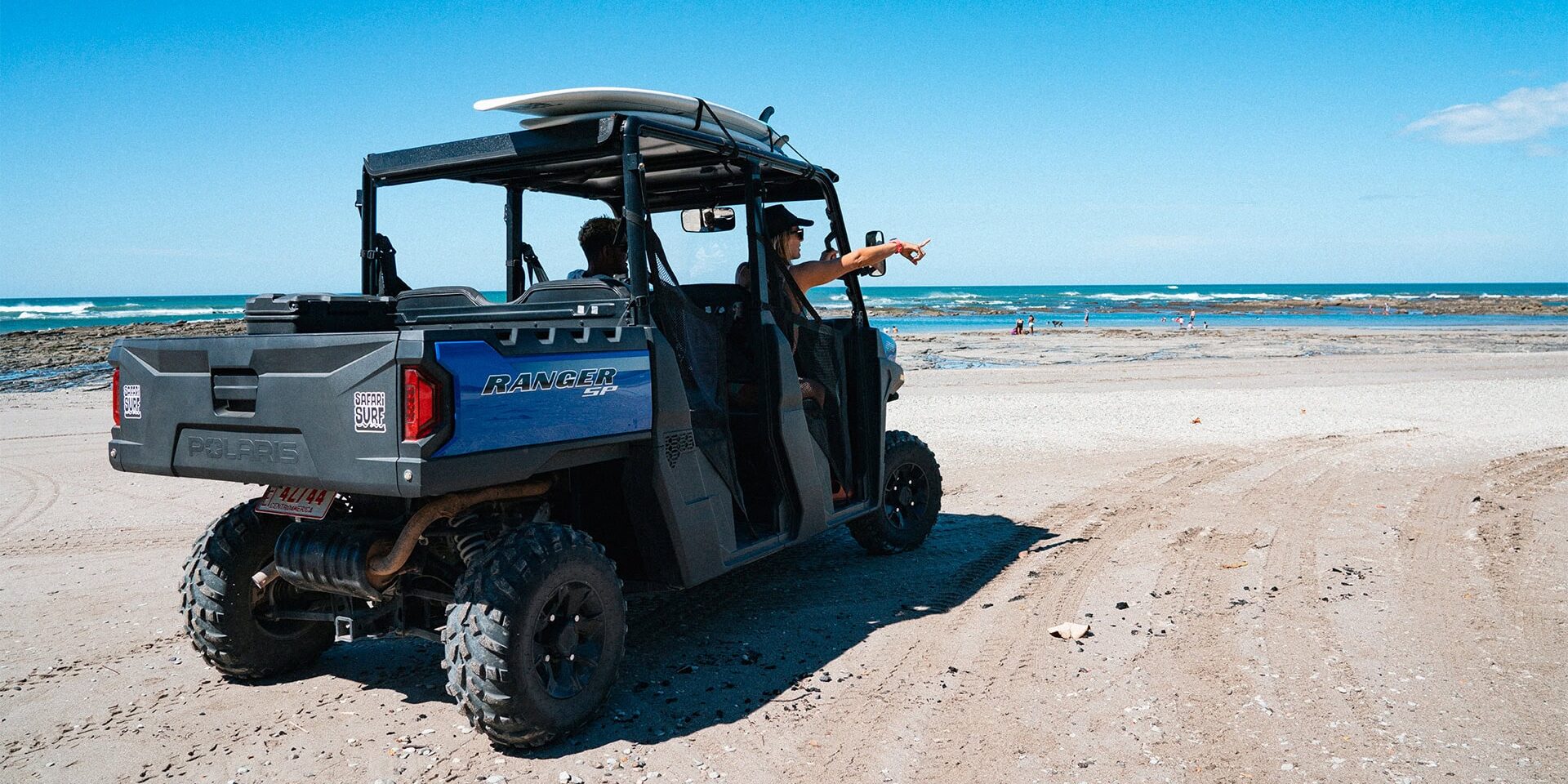
Costa Rica has more than 800 miles of coastline on two oceans, rainforests, volcanoes and a relaxed “pura vida” culture. It is an easy country to travel, but a few practical details will make your surf trip smoother. These are the tips our team shares most often.
Arriving: which airport?
- Liberia (LIR) in Guanacaste is closest to the northern Pacific surf towns, including Nosara (about 2.5 hours) and Tamarindo (about 1 hour).
- San José (SJO) is better for the central and southern Pacific and for the Caribbean coast.
Direct flights from North America and Europe land at both. Check your passport is valid for your whole stay and confirm current entry rules with your airline before you fly. Our guide to getting to Nosara covers flights, shuttles and driving.
Getting around
- Shuttles: shared tourist shuttles connect the main destinations and pick you up at your hotel.
- Rental car: gives freedom, but choose a 4×4 for beach towns with dirt roads. Never leave valuables in the car.
- Domestic flights: small planes link San José with several beach towns and save long drives.
- Buses: very cheap, but slow, with connections.
Money
The local currency is the colón, but US dollars are widely accepted in tourist areas. Cards work in most hotels and restaurants, while small sodas (local eateries) and markets may be cash only. Carry some small notes and expect to pay in colones for buses and tips.
Seasons on each coast
- Pacific, dry season (December to April): sunny days, offshore winds, smaller and cleaner waves. Best for beginners and improvers.
- Pacific, green season (May to November): bigger, more consistent south swells, afternoon rain, fewer tourists and greener landscapes. Great for intermediates and advanced surfers.
- Caribbean: surf mostly from December to March, when winter swells reach reefs like Salsa Brava.
Get the full month-by-month picture in the best time to surf in Costa Rica and learn why the dry season is so clean in Papagayo winds explained.
Where to surf
- Nosara (Playa Guiones): long, sandy and consistent. Perfect for learning and progressing.
- Tamarindo: beginner waves and lots of nightlife. Compare in Nosara vs Tamarindo.
- Playa Hermosa (Jacó): powerful beach break for advanced surfers.
- Pavones: a legendary long left in the far south.
- Puerto Viejo: heavy Caribbean reef waves for experts.
Health and safety
- Tap water is safe to drink in most of the country, but check locally in remote areas.
- Use mineral sunscreen and insect repellent, and drink lots of water.
- Respect rip currents. If you are not sure, surf with a coach or near a lifeguard.
- Travel insurance that covers surfing is strongly recommended.
Travel lighter on the planet
Costa Rica produces most of its electricity from renewable sources and protects around a quarter of its land. You can help by bringing a reusable bottle, using reef-safe sunscreen and choosing local businesses. More ideas in sustainable travel in Costa Rica.
Ready to go? Let us organise the surf part of your trip with our Costa Rica surf camp. Questions? See the surf camp FAQ.