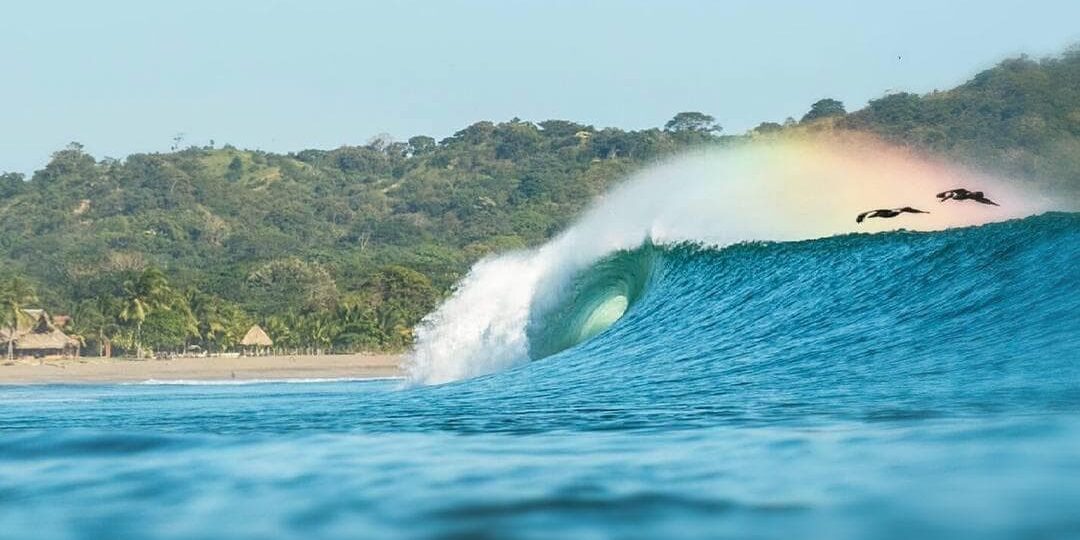
Panama sits between two oceans, which means there is almost always surf somewhere. The question is not if there will be waves, but which kind of waves you want. The answer depends on your level and on which coast you choose.
The short answer
- Beginners and improvers: Pacific coast, December to April.
- Intermediate and advanced surfers: Pacific coast, May to November, especially in the heart of south swell season.
- Advanced surfers who like reef: Caribbean coast (Bocas del Toro), December to March.
Pacific coast, dry season (December to April)
The dry season brings blue skies, very little rain and gentle offshore winds for much of the day. Swells are smaller and more manageable, so overhead days are rare. That makes these months perfect for learning and progressing at spots like Playa Venao, where clean, waist- to chest-high waves are common.
Expect warm water (no wetsuit needed), sunny afternoons and a busier town around Christmas, New Year and Carnival.
Pacific coast, rainy season (May to November)
This is Central America’s main swell season. Storms in the far South Pacific send long-period south swells all the way to Panama’s south-facing coastline. Playa Venao, Cambutal and Santa Catalina come alive with bigger, more powerful waves.
Mornings are usually glassy, with rain more common in the afternoon or at night. Landscapes turn bright green and the beaches are quieter. Good news for beginners: in Playa Venao the sheltered corners of the bay stay gentle even on bigger days, so learners can still surf during swell season.
Caribbean coast (December to March)
On the Caribbean side, the swell season lines up with the northern winter. Cold fronts and storms in the Atlantic and Caribbean send waves south to the reefs of Bocas del Toro. Expect warm-water reef breaks, sometimes hollow, best for intermediate and advanced surfers. Between seasons the Caribbean can be flat for long periods.
Month by month on the Pacific
- December to February: clean, small to medium surf, peak sunshine, busy holidays.
- March and April: still dry, often a bit more swell, great all-round months.
- May and June: first big south swells, fewer tourists, green landscapes.
- July and August: consistent swell and a short drier spell many locals call “veranillo”.
- September to November: most rain, still good swell, quietest time to travel.
Tips for planning
- Check the forecast a week out and look at swell period, not only height. Our guide to reading a surf forecast explains how.
- If you are learning, book a coach who knows which part of the bay to surf on each tide.
- Combine coasts in winter: a week in Playa Venao, then a few days in Bocas del Toro.
Planning a longer trip? Our Panama surf road trip guide has routes and driving tips, and the Playa Venao guide covers the town itself.
Pick your dates and level, and we will match you with the right program at our Panama surf camp.