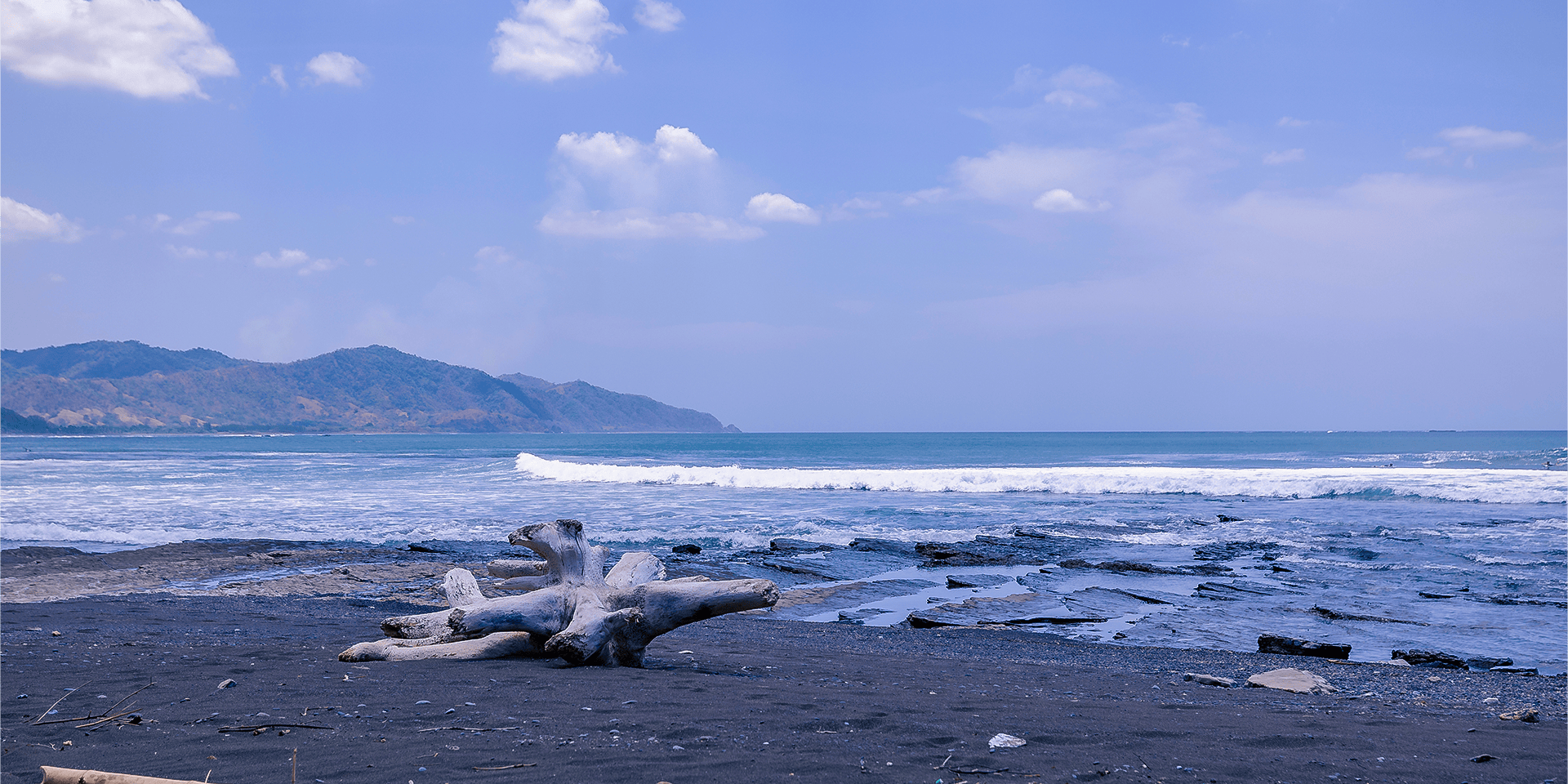
Panama is still one of Central America’s most underrated surf destinations. Most surfers fly over it on the way to Costa Rica or Nicaragua, which is good news for those who stop: warm water, uncrowded peaks and two coastlines that together offer surf almost all year. This road trip guide covers the best stops; if you would rather have everything arranged, see our surf camp in Panama at Playa Venao.
This guide shows a classic road trip along the Pacific side, plus an optional Caribbean extension.
Getting there
International flights land at Tocumen International Airport (PTY) in Panama City. From there you can rent a car or arrange a private transfer to the Azuero Peninsula. For Bocas del Toro, take a short domestic flight.
Car tip: choose a high-clearance SUV or 4×4. Main roads are good, but beach access roads are often dirt and can include shallow river crossings in the rainy season.
Stop 1: Playa Venao (Azuero Peninsula)
About five hours’ drive west of Panama City, Playa Venao is a crescent-shaped bay that works for every level. The centre of the bay picks up the most swell and can produce long, fast rights on a good day, while the protected corners stay gentle even when the middle is big. That makes it one of the most versatile surf spots in the country, and the home of our Panama surf camp.
The small town has boutique hotels, surf hostels, good restaurants and a fun evening scene. Find food tips in our guide to the best restaurants in Playa Venao, and everything else in the Playa Venao guide.
Stop 2: Cambutal
A short drive further west, Cambutal is quieter, with jungle-covered hills rising straight from the sea. You will find a beginner-friendly beach break, a powerful right point and several reefs. Some of the best breaks are reached by rough dirt roads, which may need four-wheel drive after rain.
Stop 3: Santa Catalina
About five hours from Cambutal, Santa Catalina is home to Panama’s best-known wave, a powerful right-hand point that breaks over volcanic rock. It is a spot for experienced surfers, but a nearby beach break suits improvers. Santa Catalina is also the gateway to Coiba National Park, a UNESCO site with world-class diving and snorkelling.
Optional: Bocas del Toro (Caribbean)
This archipelago is a completely different trip: turquoise water, reef breaks and island life, with water taxis taking you from wave to wave. The best surf arrives in the northern winter, roughly December to March. Waves here are mostly for intermediate and advanced surfers.
When to go
- Dry season (December to April): smaller, clean waves on the Pacific with offshore winds. Ideal for beginners and improvers.
- Rainy season (May to November): bigger south swells for intermediate and advanced surfers.
Read the details in the best time to surf in Panama.
Suggested itineraries
- 7 days: 5 nights in Playa Venao, 2 in Cambutal.
- 10 days: 6 nights in Playa Venao, 1 in Cambutal, 3 in Santa Catalina.
- 14 days: add 4 nights in Bocas del Toro in winter.
Tips for surfing in Panama
- Watch a few sets before paddling out at a new spot and respect local surfers.
- Bring reef booties for rocky points and a small first aid kit.
- Cash is useful in small towns. Panama uses the US dollar.
- Do not drive at night on rural roads.
Prefer to have everything organised? Start with a week at our Panama surf camp in Playa Venao and explore from there.