Picking a surfboard can feel overwhelming. Surf shops and websites are full of the latest pro models, and most of them are wrong for the average surfer. The board under your feet decides how many waves you catch, how stable you feel and how quickly you improve, so it is worth getting right.
Below, our coaches explain what to ride at each stage, using Playa Guiones in Nosara as the example wave, and answer the classic question: should you bring your own board or rent one on your trip?
First, know your wave
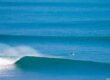
A good board choice always starts with the wave. Playa Guiones is a long, open beach break with a sandy bottom and several peaks. It is forgiving, but it can still show some power on a solid swell, and the tide changes it a lot:
- Low tide: steeper, punchier waves and faster take-offs.
- Mid tide: clean walls and easier paddling, the sweet spot for most surfers.
- High tide: softer, fatter waves, great for longboards and beginners.
Best Surfboards for Beginners: Soft Tops and Longboards
When you are learning, you need a board that paddles easily, feels stable and forgives a late pop-up. That means length, volume and soft rails.
- 8’0″ to 9’0″ soft top (foam) boards
- wide, thick longboards
- funboards with plenty of float
A foam board is also safer for you and for the people around you when you fall. Many coaches would say you should stay on a longboard until you can do a proper cutback. It sounds slow, but surfers who downsize too early usually stop progressing. On our learn to surf programs we use boards chosen specifically for Playa Guiones.
Improvers: mid-lengths, eggs and hybrids
Once you stand up every time and start riding along the face of the wave, you can experiment. A forgiving mid-length gives you more manoeuvrability than a longboard without losing paddle power.
- 6’8″ to 7’6″ mid-lengths
- egg shapes and hybrids
- wide fish shapes with generous volume
If you are new to this stage, stay at the longer end of that range. A 7’6″ is far easier to learn turns on than a 6’8″.
Your first shortboard
When you can pop up cleanly, turn and generate speed, you may be ready for a shortboard. Choose a high-volume shortboard rather than a high-performance one. Look for volume spread under the chest and a fairly flat rocker. Both help you paddle in early and keep speed through flat sections.
Advanced surfers
On a solid south swell, Guiones offers fast inside sections and open shoulders for linking turns.
- performance shortboards around 5’8″ to 6’4″
- twin fins and quads for speed on softer days
- noseriders for high-tide cruising
Remember it is a beach break. Peaks shift with tide and sand, so a board that paddles well and works in different sections will give you more waves.
Should you bring your board or rent?
Bring your own board if you ride a shape you love, you are particular about dimensions or fins, and you plan to surf every day.
Rent or demo if you are a beginner or improver, you are still working out your ideal shape, or you do not want to pay airline fees and risk dings.
Board, leash, wax and fins are included in our surf camp packages, and our coaches will move you to a different shape as you progress during the week.
Travelling with a board: quick tips
- Use a padded board bag (10 mm or more) with extra protection on the nose and tail.
- Pack soft clothes around the board to prevent pressure dings.
- Bring spare fin screws, a fin key, a wax comb and a small ding repair kit.
- Check your airline’s surfboard fee before you book.
- Never leave a board in a hot car or in direct sun. Tropical heat can soften and delaminate it.
Want a coach to choose the right board for you? Join our surf coaching program or read intermediate surf tips next.