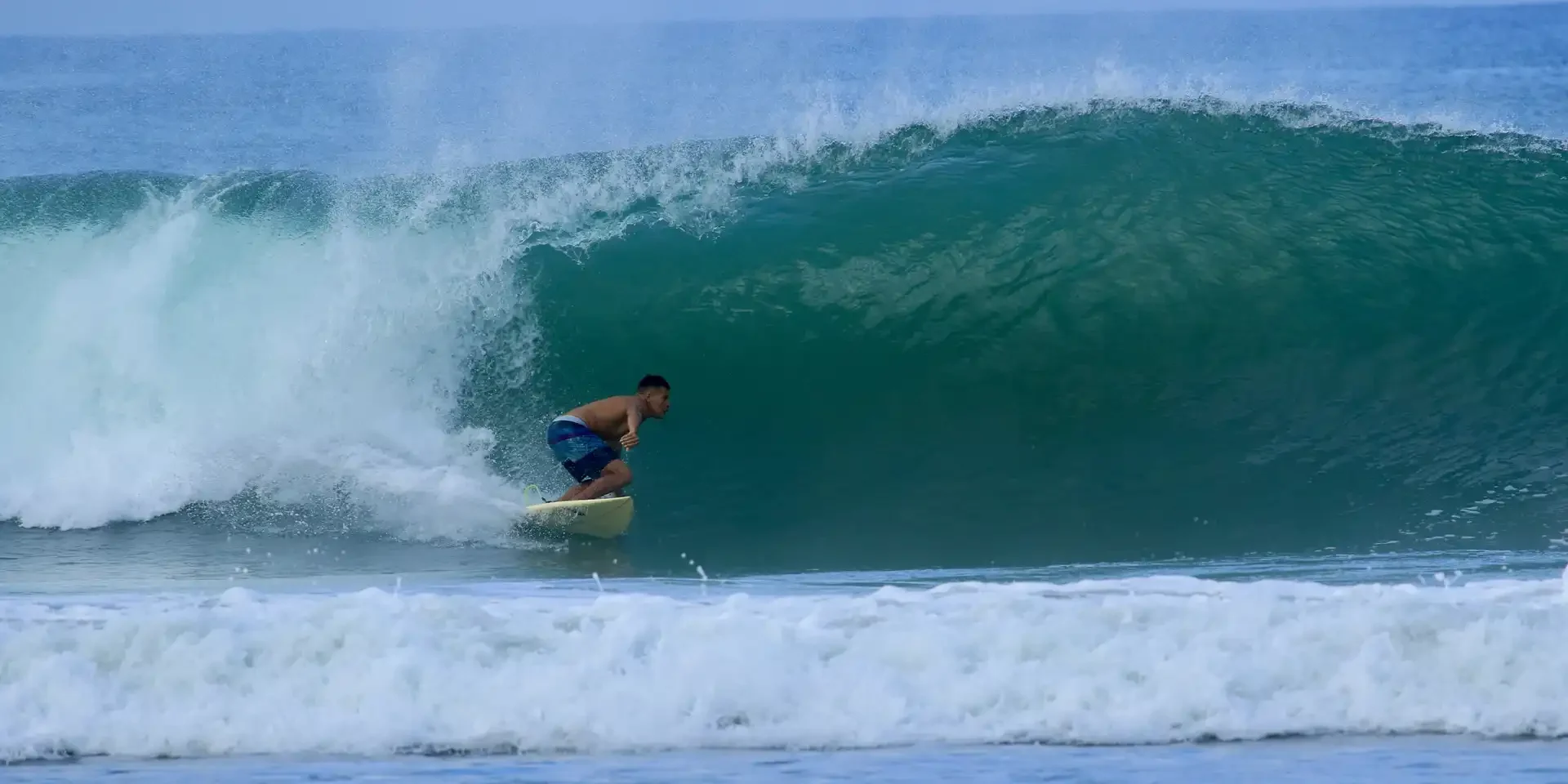
Learning to surf takes time, patience and lots of falling off. That is part of the fun. Still, after teaching hundreds of new surfers every season, our coaches see the same few mistakes slowing people down. Fix these early and you will catch more waves, stand up more often and enjoy every session more.
1. Riding a board that is too small
This is the number one mistake. Watching pros on shortboards makes it tempting to downsize early, but small boards lack the float and stability you need. Start on a large soft top, move to a longboard once you can ride along the face, and only downsize when you can turn and generate speed. The usual path is longboard, then mid-length, then fish or high-volume shortboard. Our guide on how to choose a surfboard explains each stage.
2. Lying in the wrong spot on the board
Too far forward and you nosedive. Too far back and the wave rolls under you. Find the sweet spot where the nose just lifts above the water, and use the logo or a mark on the deck as a reference until you can feel it.
3. Paddling without power
To catch a wave you must match its speed. Many beginners paddle too slowly or with short, splashy strokes. Use long, deep strokes with cupped hands, and keep paddling for two or three strokes after you feel the wave pick you up.
4. Not catching the wave at its peak
The peak is where the wave first starts to break and has the most push. Sitting too far on the shoulder means the wave passes without you. Watch where the sets break and position yourself there, with your coach’s help at first.
5. A slow, multi-step pop-up
Kneeling or standing up in stages makes the board unstable. Practise a single, fluid movement on land until it feels automatic. Our step-by-step pop-up guide shows you how.
6. Looking down at your feet
Your board goes where your eyes go. Look ahead and along the wave in the direction you want to ride, and your shoulders and hips will follow.
7. Standing too straight
A tall, stiff stance is wobbly. Keep your knees bent, back straight, arms relaxed and weight centred over the board.
8. Ignoring how weight shifts your speed
Your position on the board works like gas and brakes. Step or lean slightly forward to gain speed in slow sections, and shift back to slow down or stay near the curl.
9. Paddling out in the wrong place or conditions
Surfing waves that are too big or too crowded is dangerous for you and others. Choose gentle beginner waves, ideally sandy beach breaks like Playa Guiones, and stay away from experienced surfers at the main peak. Learn the basics of surf etiquette before you paddle out. And when in doubt, stay on the beach and watch.
The fastest fix of all: get coaching
A good coach spots the small detail that is holding you back, often in a single session. Video analysis makes it even clearer, because you can see exactly what your body is doing on the wave.
Want to progress faster? Join our learn to surf program or add video surf coaching to your trip.