Most travellers come to Ecuador for the Andes, the Amazon or the Galápagos. Surfers who know better come for its coastline: warm water, year-round swell and quiet beach towns where the lineup is still uncrowded. Timing your trip well makes a big difference, so here is how Ecuador’s surf seasons work.
The short answer
- Peak surf season: December to April, when northwest swells and light, often offshore winds dominate.
- Best for beginners and improvers: May to November, with smaller surf, glassy mornings and very few people in the water.
Ecuador’s surf regions
Ecuador’s mainland coast is usually split into four zones:
- North: from Mompiche down to Bahía de Caráquez.
- Central: around Manta.
- Baja Manabí: the coast south of Machalilla National Park, where Ayampe is.
- South: from Montañita to Salinas.
Our Ecuador surf camp is in Ayampe, in the Baja Manabí zone, a small village between the jungle and the sea that works with swell from both the north and the south.
December to April: swell season
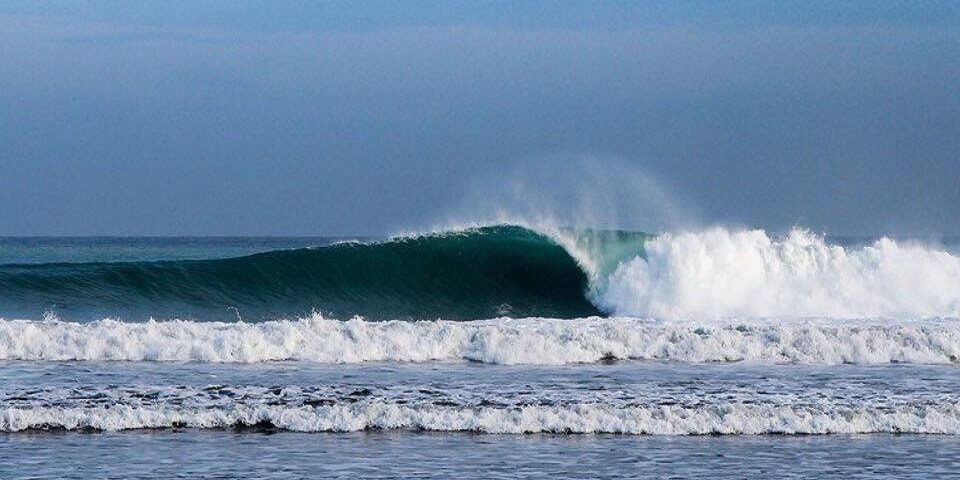
During the northern hemisphere winter, northwest swells reach Ecuador regularly. Winds are often light or offshore, and many of the region’s points and reefs switch on. This is the best time for intermediate and advanced surfers, and the period when beach towns are busiest, especially around Carnival.
It is also the warmer, wetter time of year on the coast, with tropical heat and occasional heavy showers.
May to November: quiet and glassy
From May the dominant swell turns to the south. Afternoons can be onshore, but mornings are usually glassy, and surf is often smaller and easier. With thin crowds and clean early sessions, these months are excellent for learning and progressing. The sky is more often grey (locals call it the “garúa” season) and evenings are cooler.
Water temperature
Water on the Ecuadorian coast is usually between about 21 and 27 °C (70 to 80 °F). It is warmest in the first months of the year. In the cooler months a thin long-sleeve top or spring suit can be comfortable for long sessions, but many surfers stay in boardshorts all year.
Why Ayampe works all year
Ayampe has a beach break that picks up swell from several directions, so there is almost always something to surf. Nearby points and reefs give more options when the swell is right. The village itself is tiny, calm and green, a bit like Nosara was twenty years ago. Read more in our Ayampe guide and see where to eat in Ayampe.
How to get to Ayampe
Most travellers fly into Guayaquil (GYE) and drive about three hours along the coast. Another option is to fly to Quito, connect to Manta and continue by road. Our team can arrange the transfer for you.
Planning tips
- Learning? Aim for May to November and surf early in the morning.
- Want more power? Book between January and April and leave some days flexible for the best swell.
- Combine your surf trip with the Andes or the Galápagos for a complete Ecuador adventure.
Ready to surf Ecuador? See our Ecuador surf camp and create your package.